drugs – Nick Grant

Tag: drugs

  • Raw Dogging Reality

    This is a story about taking the edge off…

    Mulled cider

    There’s a popular meme which asks what’s classy if you’re rich, but trashy if you’re poor. Among the answers is daytime drinking. Certainly, what gets classed as alcoholism for poor people, is just considered taking the edge off after a long hard day, for the wealthy.

    Drinking and the United Kingdom go hand-in-hand. The weather is pretty atrocious for the majority of the year, and not in a Skandinavian way, with pretty snow and ice, but instead in a miserable grey-skied, drizzly rain kind of way. The UK doesn’t get cosy during winter time, it just gets depressing. While the UK has a bad – but deserved – reputation for being the home of larger lout football hooligans, and horrendous rates of alcoholism, is it any wonder, considering the dreadful weather?

    If we examine humanity’s need for intoxication, we can see that it’s well correlated with dreadful weather. The longer and more miserable the winter, the more people drink.

    Looking at wider habits of intoxication, we can see that life is unbearable, for the majority of us, without something to take the edge off.

    Why then do we fetishise brutal sobriety?

    There’s noting admirable about being teetotal. I’ve been teetotal for a month and a half, and I doesn’t make me morally superior. I’m not a better person, just because I’m not imbibing alcohol. The only reason not to drink is pure vanity: that I’m dieting, and alcohol was contributing the vast majority of calories which I was consuming.

    Without alcohol, I’m struggling. Without alcohol, I’m unstable and finding it almost impossible to plod along at snail’s pace, bored out of my mind. I’m finding it impossible to get through the day: it’s unbearably horrible.

    I do not recommend experiencing raw unfiltered reality. It’s awful.

    Of course, nobody does experience raw unfiltered reality. Everyone drinks. Everyone smokes. Everyone pushes their buttons in some artificial way or another. Everyone takes medications. Everyone finds a way to artificially alter their brain.

    I suppose that when I said we don’t have the Scandinavian kind of cosiness, with warm sweaters, open fires, great central heating, insulated houses and snow outside, we do have a British kind of cosiness: country pubs, with lots of British beer. The Britons have always been big consumers of beer, and never moreso than during the dark, cold winter months. The British adapt to their miserable British winter weather, by retreating to the pub, and drinking more.

    The idea that we should be able to maintain a certain constant level, in all areas of life, year-round, is complete insanity. Of course we need to sleep more when the days are shorter, the nights are longer, and it’s colder. Of course, we need to be less active in the winter. Of course, we can’t work the same hours. Of course, we can’t go outside as much. Of course, we’re going to eat and drink more. The seasons are not constant – there is summer and winter – and neither can we, as biological creatures, be constant either.

    Doing a very extreme diet at the same time as being teetotal, coinciding with the clocks going back, the nights getting longer and the weather getting colder: this is something which is awful to experience, raw and unfiltered. I’m tired, hungry, cold, and I’m hit with the full force of the horrendous anxiety which human existence induces. This world is fucking shit, to experience without anything to take the edge off.

    While the whole world is drinking alcohol, smoking, taking tons of pills, drinking tea, coffee, energy drinks, eating super sugary foods, upregulating themselves with gym workouts and suchlike, and bombarding themselves with a ton of dopamine-inducing entertainment – film, TV, video games, news media, social media, internet, pornography – I’m struggling along, experiencing raw reality, which is truly terrible. Do not recommend. Stay with your trusty pills – you need them!

    The phrase “raw dogging reality” is stolen from a Tweet I saw, but it very aptly sums up the horribleness of human existence, without pills, booze, drugs, cigarettes or any of the other vices which make life liveable.


    Tags:

  • Help or Hinder

    This is a story about giving a hand up not a handout…

    Empty cupboard

    In my 39 years on this planet I’ve come across a few people whose lives I’ve tried to intervene in to produce a positive outcome. I’m somewhat undecided as to whether I’m helping, hindering, or making no difference except to myself, because I’ve wasted time, energy and money where it might otherwise have been invested in my sister, my niece or my friends and other important close relationships.

    I try not to over-invest in anyone or anything. I’m heavily invested in work, but I still treat it like a job and I don’t work too hard or take things too personally – work is just a means to an end; an efficient way of complying with capitalism’s coercion.

    There are two individuals who I have invested a significant amount of time, effort, energy and money into helping. I should qualify what I mean by “significant” when it comes to money. I expect that to most of my readers “significant” does not have the same meaning as it does for me. The only sums of money which have had a significant impact on my life have been related to my divorce and £8,000 of unpaid rent and bills which an ex-flatmate owes me. This is not a boast – it’s simply the honest truth about my good fortune in life.

    The first individual was a homeless alcoholic man I met in a park. He was making a great deal of effort to deal with the clusterf**k of issues he faced, which were bereavement trauma, commensurate self-medicating alcoholism, physical health issues related to sleeping rough, and the general reluctance of the welfare state to see his life as valuable. He had been repeatedly denied the holistic care that he needed: bereavement/trauma counselling, a residential alcohol detox, a residential rehabilitation program, a hostel bed and welfare payments to allow him to eat without begging until he was physically and mentally well enough to be able to work.

    It seemed as if this first fellow was worth helping, because I could at least get him off the streets, into a hostel, and provide as much support as possible to help him navigate the maze of state services in order to get the alcohol detox and rehab that he desperately needed, as well as navigating a further maze of state services in order to get welfare payments to give him a meagre income while he recuperated.

    To my mind, it was worth the money of renting a room for this guy and meeting him every day, to help support him through interminable meetings with the local council and various bureaucrats who act as gatekeepers, stopping sick people like him from becoming well and getting back on their feet.

    The second individual was a young cocaine addict I met at a rehab. He was mostly adhering to the rehab program, although he had failed a drugs test on a couple of occasions and was obviously not committed to an unrealistic level of abstinence from drugs and alcohol. I felt sorry for this young chap because he’d already badly screwed up his life by getting a criminal record, yet he was clearly an intelligent and enterprising fellow. I suppose the second individual’s issues were more complex, having to do with upbringing and the company he kept, which was liable to keep him forever in a life where recreational use of drugs was commonplace, and drug dealing was also an ever-present temptation, for easy money. I wouldn’t be able to give an oversimplification of the underlying issues, so I won’t even try – it would do a great disservice to that young man.

    To my mind, it was worth the money of providing financial assistance to the second guy, because I hoped that he would see me as a friend, instead of a parent or other authority figure; I hoped that he would naturally arrive at the conclusion that it’s a good idea not to abuse the kindness of friends, and begin to change from the mindset of “borrowing” and stealing from friends and family to feed a drug habit, to a new form of behaviour where he would see that some people are kind and patient. I thought he could use another person in his life who wasn’t going to get fed up with his lies, his dishonesty and eventually his behaviour being so resistent to change that he would end up abandoned. I felt I could help because I have deep pockets and a lot of patience.

    With the first individual, he got his hostel bed, his alcohol detox, his rehab, and now he’s lived 5 years clean and sober, he got married and he’s starting his own business. He’s my big success story.

    With the second individual, he’s managed to rent a room. That’s about where the good news ends. The second individual has had vastly more financial investment from me, which seems to have made very little net difference… in fact, he seems to be more in debt now than when I started trying to help him. My tireless patience and refusal to abandon him seems to have only ever once become apparent to him, when he asked me why I kept forgiving him, which was a wonderful moment. At least if I’m the one and only person in his life to have never abandoned him, and that’s caused him to question whether he should “borrow” and steal from his friends and family until they cut ties with him and abandon him, then that’s progress of a sort.

    I’m conflicted about whether I should continue to support the second individual. I suppose I made a decision early on that the way I was going to help him was to not abandon him, so in a way I’m committed. What can be said for certain is that he is exceptionally talented at p*ssing off his friends and family and losing any source of income, such that he regularly becomes destitute, so there will probably be many more occasions where he will slowly realise that it’s very useful to have me as a loyal friend who’s decided to support him no matter what, purely for the point of teaching him the lesson that not everybody will abandon you: there is some value in treating certain loyal friends with more respect than everybody else.

    My girlfriend tells me that I’m being used and that I should abandon the second individual, given his repeated demonstrations of an inability to learn, and an inability to recognise a golden opportunity to receive assistance. I’ve regularly offered to help in life-changing ways – to break the cycle he’s stuck in – but he’s been impossible to persuade. You can lead a horse to water but you can’t make it drink.

    This essay is not about what a worthy and wonderful charitable individual I am, but in fact about the ethical dilemmas I face about whether I’m helping or hindering; whether I’m investing my considerable resources in the right places.


    Tags:

  • Suddenly Everything is OK

    This is a story about overnight recovery…

    Flip flops

    One day you can’t feel your leg. One day a leg is twice the size of the other one. One day your kidneys have stopped working. One day you’re in agony from muscle and nerve damage caused by DVT. One day you’re in hospital on dialysis and you’re very sick. One day you’re physically dependent on a medication which you’ve been buying on the black market, and you’ll have seizures if you stop taking it. One day you’re so addicted to a drug that you won’t sleep, eat or drink, because you don’t want to stop your binge for a single second. One day you’re virtually bankrupt. One day you’re homeless. One day you’re jobless. One day your mental health is so bad that you’re hearing voices, seeing things and you’re paranoid about everybody and everything, to the point where you think even the person who loves you the most in the world is your enemy.

    Then, overnight, you recover.

    Overnight, all your physical health problems are cured.

    Overnight, your mental health problems are cured.

    Overnight, all your substance dependency – addiction – problems are solved.

    Overnight, you have a house.

    Overnight, you have a job.

    Overnight, your debts are repaid.

    Overnight, you have lots of money.

    Nope.

    Just nope.

    I was rummaging in the boxes of stuff which managed to survive the chaotic years of my life and I found a pair of flip-flops with a piece of string tied to them. The string is there because I couldn’t feel my foot and I couldn’t control its movement – I couldn’t walk properly. When I was walking in flip-flops, the left one would just fall off after ten or twenty steps, because I didn’t have enough feeling in my toes to be able to ‘grip’ the flip-flop properly. The string was my improvised attempt to be able to wear my beloved flip-flops during some nice weather.

    My attempt at using a piece of string to fix my inability to wear flip-flops was a lovely metaphor for the attempts I was making to solve all my problems, overnight.

    That was two years ago.

    Things got a lot worse before they got better.

    Things were so bad that on the very worst day of my life, I woke up in an hospital intensive care ward, with a tube down my throat forcing air into my lungs, a tube up my nose and into my stomach, forcing activated charcoal and other things into me, 6 canulas all for pumping me full of various things, an arterial canula for measuring my blood pressure with incredible accuracy, plus I was attached to an 8-cable ECG machine, a clip on my finger measured my blood oxygen and I had been catheterised – I noticed that a tube coming out of my penis had been taped to the inside of my leg. The worst thing was that I was alive.

    I did not want to be alive.

    I had tried very hard not to be alive.

    Physically I was alive, but I was still very sick – my kidneys and other organs had shut down and I had been in a coma – and I was also going through benzodiazepine withdrawal, which is both life-threatening and thoroughly unpleasant.

    I was alive, but it turned out I didn’t have a job or a home anymore.

    I was single and without any friends. I was in a strange city where I didn’t know anybody. I didn’t have enough money to rent a place to live and support myself until I got my first paycheque. I was utterly screwed.

    So, of course I still very much wanted to be dead.

    Now, I have a nice house, full of nice things. I’ve made some friends and I’ve met some women. I go on dates. Sometimes those dates go really well. I have a job. I earn a lot of money. My finances are sorted out. I’m no longer addicted to drugs or physically dependent on medication. I hardly even drink – perhaps once a week, socially.

    I can wear flip-flops.

    Weirdly, the nerve damage repaired itself enough so that I have enough sensation in my foot to be able to wear flip-flops, run, go kitesurfing and do the other things I always used to do.

    I don’t know if I’m happy – there’s still a lot of insecurity in my life; I live with an unacceptable amount of jeopardy for a person to have to suffer. I don’t have enough friends in the local area. I don’t have a girlfriend. I haven’t established myself in my new home city. I’ve barely even started to unpack my stuff.

    Compared with two years ago, my life does look like an overnight success. I’m good at my job and my colleagues are grateful for my contribution to the team and the project. The pieces of the puzzle are starting to fit together, and my life is beginning to look viable.

    It’s strange how people expect to be able to ‘save’ people who – on closer examination – have such a clusterf**k of issues that it’s easy why some would think they’re a “lost cause” and abandon them.

    I’m grateful to that handful of people who didn’t give up on me; who didn’t write me off and abandon me.


    Tags:

  • Clean & Sober

    This is a story about prescribed medications…

    Akira

    After 4 months of sobriety I’m grateful for the weight loss. My liver must be very grateful for the break. It was exactly 2 years ago that my addiction peaked, when I had managed to obtain a stockpile of my drug of choice that would last me 6 years. Having that stockpile was a pivotal moment, because I knew that I would not survive for more than 6 months with a virtually limitless supply of the drug I was hopelessly addicted to. I knew that I had tested the patience of a very supportive friend – my guardian angel – and I announced to her that I would be committed to overcoming my addiction, which I have done.

    These two achievements are not to be underestimated, and are also set against a backdrop of great financial hardship and other averse circumstances. I’ve been forced to move around. I’ve been forced to work when I’m sick. I’ve been forced to go deeper into debt and to re-invest the money I receive, in order to escape from the horrible trap I found myself caught in.

    It’s not really possible to travel directly from the depths of drug addiction and alcoholism to clean and sober living. A person can’t wake up one day and decide that they’re going to stop taking drugs and drinking. There are consequences of such a decision.

    My hospitalisation in 2017 represents the peak of the consequences of my decision to attempt to quit addictive substances. At that time, I was still physically addicted to one prescribed medication and four which I obtained on the black market. It seems obvious that I should have ended up on an intensive care ward, having seizures, in a coma, with a machine breathing for me. It seems obvious that the battle was too hard to win and I would capitulate.

    Presently, I am physically addicted to one medication and psychologically dependent on another. In terms of progress, this is a vast improvement versus taking 5 medications every day – instead of three physical dependencies, I have one, and instead of two psychological dependencies, I have one.

    I swallow one pill for anxiety. If I abruptly stop taking that medication, I risk having a fatal seizure.

    I swallow one pill for sleep. If I abruptly stop taking that medication, I will have insomnia.

    I don’t drink, which is great news for my physical health.

    I’m working, which is great news for my bank balance.

    Everything seems to be under control.

    However.

    My dependence on the black market is problematic. I had attempted to stockpile enough medication to allow myself to taper my dosage down and free myself from the physical and psychological dependence on the tablets, but the disruption of a breakup and moving house was a huge setback. My stocks are running low and I’m having problems replenishing my supply.

    Of course, my plan all along was to end up completely substance-free. I tried in 2018 but my drinking got out of control. Drinking alcohol as a way of compensating for the unpleasant withdrawal side-effects of stopping medications, is not something that’s good for my health. I gained weight and became alcohol dependent. Having broken my alcohol dependency, I would like to remain mostly teetotal because it’s better for my weight, fitness and general health.

    If you talk to any doctor they will tell you that all their patients suffer significant discomfort when withdrawing from psychiatric medications which they have been taking for long periods. In fact, the doctors will tell you that it’s virtually impossible to get their patients to quit the prescribed medications which they have become dependent on.

    Why quit?

    It seems to be in vogue to stop people taking medicines which humanity has used safely and effectively for a long time. It seems to be trendy to stop people from taking opiates, benzodiazepines, tranquillisers, sedatives, hypnotics, sleeping pills and a whole host of medicines which were greedily guzzled by many generations without any issues. It seems to be the way of modern medicine to offer ‘safer’ ineffective alternatives and refuse to prescribe effective medications.

    I can attest to the great difficulty of getting off the addictive medications which doctors don’t prescribe. I’ve been addicted to all of them, and I’ve successfully stopped taking all of them for lengthy periods, so I can describe in exquisite detail the very many agonies and unpleasantnesses associated with cessation of these medications. I can recall exactly what the withdrawal side-effects are like for the pills that your doctor won’t give you.

    I find it hard to find a good reason to quit and be completely 100% free from any mind-altering substances, but I’m certainly having difficulties in maintaining a reliable supply, which puts me at risk of a potentially fatal seizure. Quitting the medications which give my life enough stability to be able to hold down a well-paid job, is not desirable, but it seems necessary given the exhaustive efforts undertaken to thwart me – playing the stupid cat-and-mouse game with a bunch of people who don’t care about the consequences, is a waste of energy and I would love to be free from the stress of dependency and uncertainty about the supply of something which I physically need.

    Luckily, my physical dependency is something I have the capacity to alter – unlike type 1 diabetes – so I am following through with my plan to wean myself off the two remaining medications, hopefully slowly enough that it doesn’t destabilise me so much that I lose everything.

    My version of clean and sober might not seem very impressive to you, but I assure you that it is a considerable achievement to have beaten fully-blown addiction to every substance imaginable and restored some health and wealth to my shattered life.


    Tags:

  • Some Of My Problems Are My Own Fault

    This is a story about responsibility…

    Suction cup

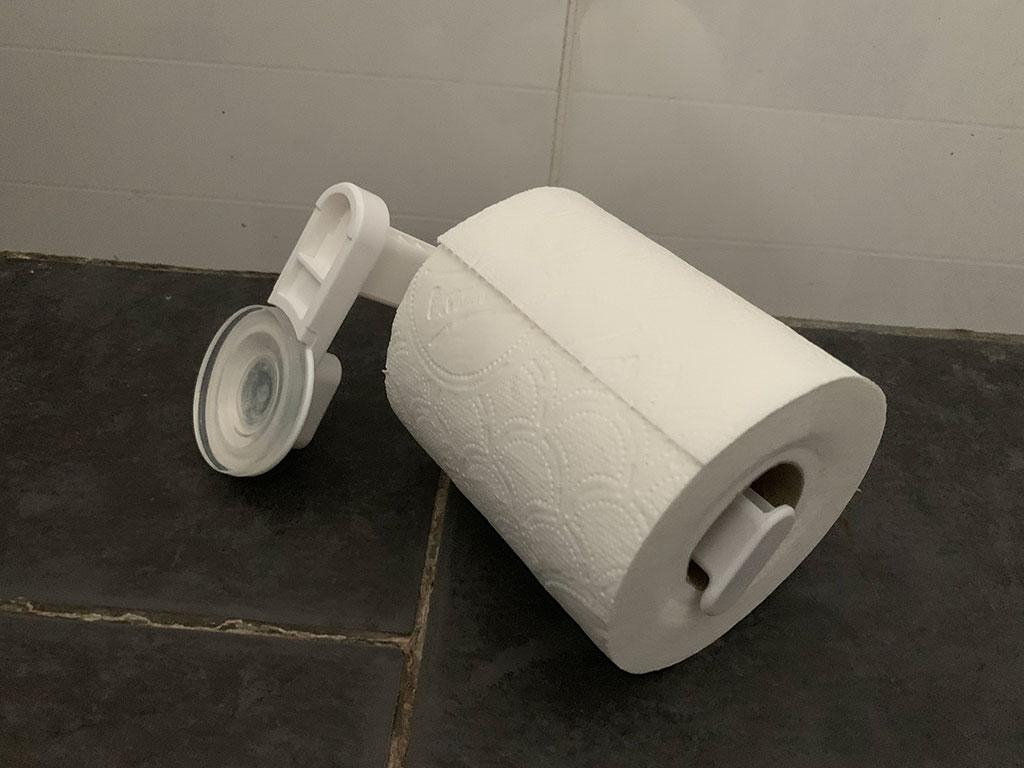
    Why does it matter that the toilet roll holder in my house is held onto the wall with a suction cup? Why does it matter that somebody cut some corners somewhere? Why does it matter that somebody did a sloppy, careless job? Why does it matter that people act without concern for the consequences? Why does it matter that some of us want to be idle?

    We bring up our children on a diet of propaganda about everybody having to pay their way in society – nobody getting a free ride – when our intention all along was to propagate sufficiently to be idle in our old age. We imagined that the older children would raise the smaller ones. We imagined that the more mature and adult members of our family would feel some responsibility towards their DNA donors, as they reached the end of their lives.

    I guess we hope that our children won’t know any different. If they’re born into a terrible world, they won’t be able to imagine a better one, so they’ll accept their terrible fate. Is that the logic? Somebody needs to explain it to me, because I don’t understand.

    My life lacks meaning and purpose.

    What if I met someone so amazing and beautiful that they convinced me it was a good idea to have children, because I knew how much happiness and satisfaction – peace – it would bring me as an animal, although very much in conflict with my own human consciousness.

    My body was evolved for the propagation of my genes. My body’s sole purpose for existence – in evolutionary terms – is for sexual reproduction. To act in defiance of my basic instincts is physically painful, like putting my hand in a fire.

    I stopped following the instructions at some point.

    I’ve lost my way.

    Loneliness and isolation should drive me to be social. Horniness and reproductive instincts should drive me to impregnate. Fear of death and extinction of my genes should drive me to seek to protect and replicate as many copies of my genes as possible. All the many millions of years of animal evolution have led to this point. Everything in my genetic programming tells me to carry on doing what every ancestor has ever done, since the dawn of life itself.

    However.

    I’ve gone off-script.

    I think that filial affection, sibling bonding, family ties, clan association and a genetic predisposition towards hostility directed at those of significantly differing DNA makeup – a wish to see those who don’t share common genes perish – somehow bypassed me. The thing that’s far louder in my head is the conscious voice that sprung into existence, perhaps as an evolutionary accident, but which has managed to narrate things to the point where that voice directs my behaviour far more than my bestial instincts.

    I suppose I’m what you’d call anti-social. Perhaps criminal and deviant. Society has generally decided that I’m dangerous and should be shunned and marginalised.

    Born into a household full of addiction and alcoholism, not feeling planned or wanted and not seeing any good role model in my parents, I found myself always somewhat the odd-one-out at school and in other social situations. I think I decided very early on that I’m unlovable. My life goals were always confused. The hedonism I saw my parents practice, with no regard for societal norms, conflicted with the nonsense they spouted in their state of intoxication, which claimed to be motivated by higher ideals: Values. I never saw any values, but I came to understand – conceptually – what values there were in the world, and why a person might hold a certain set of values.

    I can simultaneously hold in my head all the various reasons – such as social cohesion – that a group of individuals might subscribe to a common set of values, whilst also knowing the payoff for breaking the rules. I knew, for example, from a very early age that getting a drink or a drug into my system must be worth any amount of societally imposed consequences, for that is what I saw throughout my upbringing.

    My father talked openly about his criminal conviction for drugs, while my mother boasted about drug smuggling and encounters with the police, and both seemed proud and happy to have flouted the law and earned the disdain of wider society. They seemed to revel in their place as societal outcasts, earned because of their deviant behaviour and refusal to change their wicked ways.

    Yet, it seems better if I imagine myself to have been immaculately conceived and have lived my adult life with no unconscious bias left-over from childhood. It seems as if I should be judged on the basis that my values are identical to everybody else’s. It seems that every choice I’ve made should be viewed as having been made with complete free-will, and without the influence of my upbringing.

    I fess up.

    I done it.

    I done a bad thing.

    It’s all my fault and I’ve got nobody to blame but myself.

    There. Happy now?


    Tags:

  • Misuse of Drugs

    This is a story about fit for purpose…
    Prescription medications

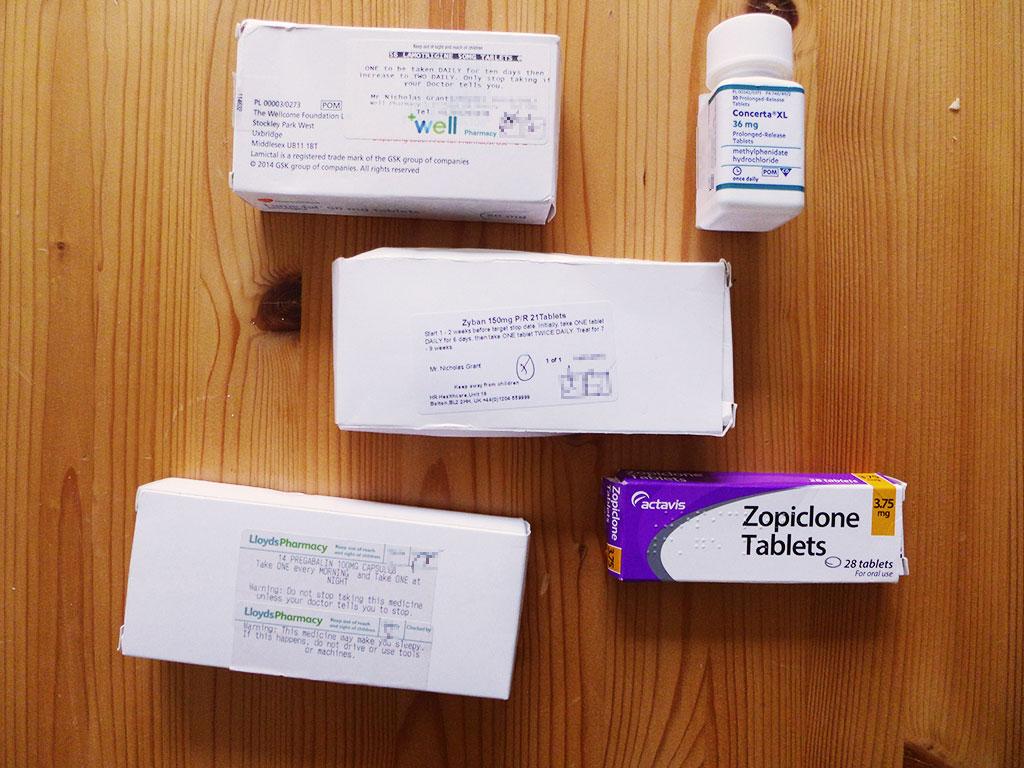
    Here are a range of prescription medications. Three of them are illegal to possess without a prescription under the Misuse of Drugs Act, because they are scheduled as “class B” and “class C”, respectively carrying a 5 year prison sentence, a 2 year prison sentence and an unlimited fine.

    So, 3/5ths of the medicines pictured here could see me locked up for somewhere between 2 and 5 years, if I didn’t have a prescription.

    The medication at the top of the picture is lamotrigine, which treats bipolar depression, as well as epilepsy. It has no abuse potential, but it does carry a high risk of causing a fatal skin rash.

    The medication in the middle of the picture is bupropion, which treats addiction to nicotine. It has no abuse potential, but it also carries a high risk of causing seizures, which might be fatal.

    The medication in the bottom-left of the picture is pregabalin, which treats neuropathic pain. It is addictive and can be abused. Pregabalin is a “class C” controlled substance, and anybody caught in possession without a prescription, will receive 2 years imprisonment and an unlimited fine.

    The medication in the top-right of the picture is methlyphenidate, more commonly known as Ritalin®, which treats Attention-Deficit-Hyperactivity Disorder (ADHD) and Attention-Deficit Disorder (ADD). It is addictive and can be abused. Methlyphenidate is a “class B” controlled substance, and anybody caught in possession without a prescription will be imprisoned for 5 years and receive an unlimited fine.

    The medication in the bottom-right of the picture is zopiclone, which treats insomnia and other sleep disorders. It is addictive and can be abused. Zopiclone is a “class C” controlled substance, and anybody caught in possession without a prescription, will receive 2 years imprisonment and an unlimited fine.

    So, if I didn’t have a prescription for all the medications on this table, I could be facing 9 years in prison and an unlimited fine, should the judge decide that my sentences should run consecutively, not concurrently, due to the gravity of my crime.

    Yet, millions of UK citizens receive the medicinal benefits of pregabalin, methylphenidate and zopiclone, and the quality of their lives is greatly improved. These tablets were developed as medicines by pharmaceutical companies, to treat medical problems. Substantial empirical evidence was gathered in many controlled trials, to prove that these medicines were safe and effective at treating the medical problems they have been licensed for.

    Indeed, these medicines have unexpected benefits beyond the purpose they were licensed for. Lamotrigine improves sleep quality. Bupropion is a fast-acting non-drowsy antidepressant, which also increase libido and enjoyment of sex. Pregabalin reduces anxiety and aids sleep. Methylphenidate improves concentration, allowing students to study harder and for longer periods. Zopiclone can prophylactically prevent psychosis and mania, by preventing sleep deprivation.

    It is very hard to argue that the Misuse of Drugs Act and the Psychoactive Substances Act are successful laws, because the evidence shows that the use of mind-altering substances remains entirely unaltered by legislation which seeks to discourage that behaviour, and harshly penalises those who break the law.

    If I approached my GP and asked for zopiclone to help me sleep, methylphenidate to help me concentrate at work, pregabalin (or any benzodiazepine) to treat my anxiety and zopiclone to treat my depression, they would flatly refuse all my requests.

    My GP would tell me that zopiclone is too addictive, despite my insomnia ruining my life. My GP would tell me that methyphenidate is too addictive, despite my inability to concentrate impairing my ability to be productive at work. My GP would tell me that pregabalin is not licensed to treat anxiety, and it’s too addictive, despite my poor quality of life due to anxiety. My GP would tell me that benzodiazepines are too addictive, despite my life-ruining anxiety. My GP would tell me that bupropion is not licensed to treat depression.

    Instead, I would be offered sertraline, which would allegedly treat my depression and reduce my anxiety. Sertraline is very slow to take effect and it has an emotionally-blunting effect, as well as affecting sex drive and ability to orgasm. Sertraline is not an effective treatment for anxiety. Sertraline is not an effective sleep aid. Anybody who has ever tried to quit sertraline will tell you that it is very addictive and the withdrawal side effects are intolerable.

    In short, doctors would offer me nothing.

    In short, doctors would tell me to go away, even though their medicine cabinets are stuffed full of medicines which have been extensively proven to treat the ailments which ruin my quality of life. The medications exist, but I would be denied a prescription to access those medications.

    This much like a man who is dying from a bacterial infection being told that he’s not allowed any penicillin, because a small number of people have a penicillin allergy.

    Then, there are medications such as diacetylmorphine and ketamine, which are considered essential medicines. Diacetylmorphine, more commonly known as heroin, is scheduled as “class A” which carries a 7 year prison term and an unlimited fine, if possessed without a prescription.

    How can we have a Misuse of Drugs Act which puts diacetylmorphine – a medicine routinely prescribed – into the same category as crack cocaine. Crack cocaine is fiendishly addictive and has zero medicinal use. Crack cocaine is so addictive, that it might even be considered to be “instantly addictive” and the vast majority of its users commit acquisitive crimes – muggings, thefts, burglaries – to raise money to pay for their drug addiction. Addiction is a medical condition, not a crime.

    How can we have a Misuse of Drugs Act which puts mushrooms into the same category as crack cocaine? In fact the law states that it’s magic mushrooms which are a “class A” controlled substance, which implies that the government believes in magic. Is that not utterly terrifying? Is it not utterly terrifying that our lawmakers are so mentally impaired that they would make specific reference in law to a certain type of mushroom which is “magic”. Like, are you for real? We actually have laws criminalising magic, in the 21st century.

    What would be a fitting punishment for anybody possessing a “magic” mushroom? Perhaps they should be made to climb a beanstalk grown from “magic” beans. Perhaps they should be lashed to a dunking seat and immersed underwater until they drown. Perhaps they should be burnt at the stake. These are the punishments that are most ususal for involvement in “magic”.

    We also know that behaviours such as sex and gambling can be addictive, but nobody imagines that gambling addicts inject decks of playing cards into their veins. In fact, gambling is widely permitted, advertised and promoted throughout society, despite its addiction potential. We are allowed to have sex, even though there is a risk of contracting sexually-transmitted diseases, and there is addiction potential.

    Terrifyingly, the government has now passed an Act of Parliament which criminalises:

    Things that cause hallucinations, drowsiness or changes in alertness, perception of time and space, mood or empathy with others

    Obviously, eating a big meal might cause you to feel drowsy. Being tired will make you drowsy and less alert. Being tired will affect your mood and make you more ‘snappy’ with others. It seems pretty obvious that children are a thing that causes drowsiness, changes in alertness, mood and empathy with others. Many mothers get post-natal depression (mood change) and many parents feel a great deal of empathy towards their children. Is the production of children going to carry the 7 year prison sentence, as the law states?

    The law helpfully tells us that:

    Food [doesn’t] count as psychoactive substances.

    But, hang on a second… aren’t mushrooms food? If I’m a mushroom producer or supplier, am I exempt from the 7 year jail sentence?

    Let us imagine that I cross-breed a “magic” mushroom with a regular mushroom, not thought of as “magic” by government lawmakers, I must surely be able to produce a non-magic mushroom, which I can supply as food, even though it might cause hallucinations, changes in perception of time and space and mood. Clearly if I used gene editing, I could produce a mushroom that was not “magic” at all – no witchcraft or wizardry necessary – and this could be bought and sold in the supermarkets as food.

    Fundamentally, the Misuse of Drugs Act and the Psychoactive Substances Act are flawed pieces of legislation, which are not protecting citizens of the United Kingdom, reducing crime, reducing antisocial behaviour, saving lives or reducing the burden on public services. In fact, it is categorically clear that the UK’s approach to mind-altering substances is a gigantic waste of money, which is also ruining countless lives, by criminalising people with medical conditions.

    The fact that we have the word “magic” in our statute books, criminalising mushrooms that are alleged to have “magical” properties, in the 21st century, is quite absurdly ridiculous. The fact that we have put “magic” mushrooms, diacetylmorpine and crack cocaine into the same “class A” schedule, carrying the harshest punishments. Diacetylmorhine is an essential medicine, administed every day by up to 130,000 doctors and countless nurses. Picking “magic” mushrooms to share with my friends is punishable by life imprisonment.

    I can understand that crack cocaine is an instantly addictive drug that drives most of its users to commit a very great deal of crime, because they are suffering from an illness. Therefore those who supply crack cocaine are committing a terrible crime, because crack cocaine exists for no other purpose than its abuse, and it’s abuse is so devastating that it ruins the life of the sick person and creates very many victims of crime. I can understand why supply of crack cocaine is punishable by life imprisonment.

    I cannot understand that “magic” mushrooms, which are not addictive, and its users commit no antisocial nuisance nor cause any burden on the state, and are an incredibly safe thing to eat with no fatalities attributed to their consumption, are seen as the same as crack cocaine in the eyes of the law. Those who supply magic mushrooms are no more guilty than a person who obtains a crate of beer, with which to share with their friends. 

    The antisocial behaviour of people intoxicated by alcohol, the addictiveness of alcohol and its adverse health effects, makes suppliers and producers of alcohol culpable for a very serious crime, which deserves harsh punishment, if we follow the logic applied to other mind-altering substances.

    To sell packs of cigarettes is possession with intent to supply an addictive harmful substance. The health damage caused by cigarette smoking and the antisocial nature of it, because of the harm caused to passive smokers by second-hand smoke, as well as the unpleasant smell of cigarette smoke, which also harms items of clothing and other property. Cigarette smoking places considerable burden on the state, who must invest significant sums of money into smoking cessation treatments, smoking prevention programs and treat the many smoking-related diseases. Smoking-related diseases shorten lives, cause early death and reduce the productive capacity of those who suffer from cigarette addiction. Cigarettes have a high economic cost to society. Suppliers and producers of cigarettes, cigars and loose tobacco are culpable for a very serious crime, which deserves harsh punishment.

    When the esteemed neuropsychopharmacologist Professor David Nutt was adviser to the government on its drug policy, he suggested – based on overwhelming empirical evidence – reclassifying all drugs based upon the health risks they posed, the harms they cause to society, and the economic cost of their use and abuse. He was forced to resign. Drugs are a politcal pawn and the government has no interest in the wellbeing of its citizens, with respect to drug use.

    We only need to look at Portugal, which took a scientific data-driven approach to its drug policy and has achieved:

    • 60% increase in uptake of addiction treatment programs
    • 90% drop in the rate of drug-injection related HIV infection
    • 45% decrease in the murder rate
    • Drug-related deaths dropped to 3 per million (in comparison to the EU average of 17.3 per million)

    The most [un]surprising thing of all is that drug use remained the same. People like to take drugs. LOTS of people like to take drugs. Alterations to the law do not affect people’s desire to take drugs. Drug laws are not a disincentive to drug taking, because drug taking has been a feature of human life since pre-historic times. People want to take drugs, hence why alcohol, cigarette and coffee consumption is ubiquitous and legal.

    2.5 million Xanax tablets were purchased on the black market in the UK. At least half a million people in the UK are using MDMA (ecstasy) on regularly, and on a single weekend, a million tablets could be consumed. Almost one million UK citizens are using powder cocaine, and most of them are affluent professionals.

    What we can learn from Portugal is that punitive drug laws have no affect on citizen’s behaviour. The criminalisation and harsh punishments are not a disincentive to illicit drug purchase and consumption.

    Legislation to criminalise the sale of alcohol – prohibition – was tried in the USA from 1920 to 1933, and it was an abysmal failure. Industrial alcohol was deliberately made extremely poisonous in 1927, causing innumerable deaths and making people blind. But people drank it anyway, getting literally “blind drunk”. Moonshine was responsible for vast numbers of speakeasy customers being poisoned: 33 people in Manhattan, NY died in just three days, for example.

    We can see from all historical evidence, worldwide, that every culture has used mind-altering substances extensively. Coca leaf chewing is common in South America. Tobacco smoking and chewing originated in North America. Betel nuts and areca leaves are chewed all over Asia. Khat leaves are chewed in Africa. Tea leaves a brewed in hot water in China and India. Coffee beans are roasted, ground and brewed in South America. Cannabis has been drunk as Bhang in India for more than 3,000 years, and the Egyptians were smoking cannabis 3,600 years ago. Opium was being consumed 5,400 years ago, by the Mesopotamians. Alcohol wins the top prize though, because it’s been brewed for at least 13,000 years – since the goddam stone age.

    The invention of distillation apparatus is a relatively recent phenomenon, but we should accept that human desire for intoxicating alcoholic beverages has been unwavering since the discovery of the fermentation process, and the invention of brewing methods. The body of archeological evidence overwhelmingly proves that beer and wine were present in human lives, continuously. Mass production of cheap distilled spirits pose new challenges, but we must remember that society does not adapt to scientific and technological advances with sufficient speed to avoid difficult periods of re-adjustment.

    The isolation of psychoactive molecules responsible for psychoactive effects, and the laboratory synthesis of those naturally occurring compounds, has resulted in highly refined and pure chemicals. The investment in high-volume chemical production for industrial and agricultural uses, makes the precursor ingredients for synthesised compounds extremely cheap, and therefore, drug supply can inexpensively meet drug demand, through mass-production. The very poorest people in the world are often able to afford to buy very potent and pure drugs.

    In 1804 Friedrich Sertürner isolated the morphine molecule from opium. In 1804 the world’s population was 1 billion and the average global income was $3 a day (adjusted for inflation). Today, 3.4 billion people live on approximately $3 a day, which means that there are 340% more people living in poverty on an increasingly overcrowded planet.

    We know from animal studies that stress and overcrowding affects behaviour adversely – “the behavioural sink” – and experiments have produced compelling evidence. Animals whose living conditions are intolerable, will prefer water laced with alcohol, cocaine, heroin and other addictive drugs. When the experiment is repeated with better living conditions, such as having other animals to socialise and have sex with, more comfortable bedding, exercise wheels and toys to interact with, then the rats prefer to drink the water without any mind-altering substances.

    Findings from experiments with overcrowding in rat colonies found the following disturbing results:

    Many female rats were unable to carry pregnancy to full term or to survive delivery of their litters if they did. An even greater number, after successfully giving birth, fell short in their maternal functions. Among the males the behavior disturbances ranged from sexual deviation to cannibalism and from frenetic overactivity to a pathological withdrawal from which individuals would emerge to eat, drink and move about only when other members of the community were asleep.

    The animals would crowd together in greatest number in one of the four interconnecting pens in which the colony was maintained. As many as 60 of the 80 rats in each experimental population would assemble in one pen during periods of feeding. Individual rats would rarely eat except in the company of other rats. As a result extreme population densities developed in the pen adopted for eating, leaving the others with sparse populations.

    Infant mortality ran as high as 96 percent among the most disoriented groups in the population.

    Translated into human terms, we see that the majority of the world’s population live in overcrowded cities. We see neglected and abused children taken into foster care. We see high infant mortality rates in the developing world. We see sexual deviancy. We see widespread manic-depressive symptoms and other psychiatric illnesses. We see men living lives of quiet, desperate isolation, withdrawn from the world and spending most of their time in their bedrooms, emerging only to grab a microwave pizza or use the toilet.

    One must remember that in the rat overcrowding experiments, there were no drugs or alcohol. The behaviour of the rats was a spontaneous response to their living conditions.

    Thus, we must conclude that the problems we see in society are not caused by drugs and alcohol, but the abuse of drugs and alcohol is caused by intolerable living conditions.

    In the west, the social problems we have are due to industrialisation and mass-production, which required high-density housing in close proximity to the factories, mills, textile manufacturers and steel works. The social problems were compounded by the service industries building tall office blocks in the business districts of major metropolitan areas. Property developers built high-rise housing blocks in cities which were already densely populated.

    Manhatten had a population of 60,000 people in 1800. Today it has a population of 1.7 million people who each earn $378,000 per annum, on average.

    Hong Kong Island had a population of about 3,000 people in 1842. Today it has 1.3 million people and a 2-bedroom city centre apartment would cost about $2 million to buy.

    Those are the affluent places.

    In the developing world, the social problems are due to the purchasing power of “soft” currencies. Only the US dollar, Japanese yen, European euro, Swiss franc, Canadian dollar, Australian dollar, New Zealand dollar and British pound, are considered to be “hard” currencies.

    Developing world nations need to build factories, mills, mines, railways, ports, power stations, which can only be paid for in hard currency, along with hospital and a university, fully equipped, staffed. The university needs a library full of books. Almost everthing has to be imported, and the suppliers want to be paid in hard currency.

    The developing world nations take out loans from the World Bank, issued in hard currency to buy what they need. The crop harvest, manufactured products and natural resources are exported to buyers who pay with soft currency. Labour is also sold using soft currency .

    $1 can purchase 8.3 minutes of labour in the USA. $1 can purchase 36 hours of labour in Ethiopia. The poorest and hungriest Ethiopians get paid 10 Ethiopian birr for 12 hours labour. A day’s wage is the same as the cost of the day’s food.

    $1 is exchanged for 30 Ethiopian birr. The dollar seller can pay 3 Ethiopians their daily wage, after they complete 12 hours labour. The Ethiopian birr seller can purchase $1 of specialist goods, specialist services, or hire a highly-qualified and experienced expert, from the richest nations. $1 could purchase 1 minute of time from a prospecting geologist to survey Ethiopia’s stone, ores, minerals, metals and gemstones. When the data is gathered, Ethiopia can then calculate the capital expenditure to purchase land, build processing facilities, buy equipment, and build supply infrastructure. Then they consider the cost the cost of paying for supply chain services. They calculate how soon they can be ready to start exporting. They calculate a sustainable export capacity and work out the anticipated lead time from initial purchase order, legally binding supply contract, agreed.  The operating costs are deducted from the expected income from the exports. It’s pretty easy maths:

    (Capital expenditure + operational costs + transport costs) – (average raw material market price x quantity of raw material available)

    This equation gives three numbers,

    1. How much money do we need spend before we see a single dollar

    2. How much money will be earned until all the natural resource is gone

    3. Proft (if any)

    Wheat to make flour with is $0.46 in the US commodities exchange. Coffee beans are $0.94/kg. Orange juice is $1.17/litre. Cotton is $0.71/kg. Raw sugar from sugar cane has by far the lowest market price, of $0.13/kg.

    Processing makes little difference: Alcohol made from cane sugar trades at $1.34/litre and refined white sugar trades at $348.

    So we can forget growing crops. The US and EU subsidise their farmers by purchasing their harvest, then dumping it in huge silos, or otherwise paying farmers a subsidy for not growing their crop, which is greater than the amount the farmer could expect to earn by selling the harvest. That’s economic warfare by the wealthy west on the impoverished developing world nations. The game is rigged.

    Then stone, ores, metal, precious metal and gemstones are worth considering.

    Iron ore trades at $89/kg. If you invested in heavy machinery and a processing plant: Copper trades at £3/lb, Aluminium at $1/lb. Nickel at $6/lb and Zinc is at $1/kg.

    This is because $1 can purchase at least 1kg of flour, which will feed a mother and child for a day. The hungriest poorest people will exchange 12 hours labour . Therefore $1 buys 87 times more labour in the poorest parts of the developing world, than it does in the USA. So $1 is offered in exchange for enough local currency to buy 1kg of flour. It costs 30 Ethiopian birr to buy 1kg of flour,

    The densest population on the planet is Tondo – a district in Manila – where you are never more than 2 metres away from another person. I’m 1.83 metres tall, so if I lay down to sleep, I would have 17 centimetres between me and the nearest person That’s disturbing.

    The developing world population has increased dramatically in the last 200 years, which is a lot of hungry mouths to feed, in countries which might not have clean drinking water, medicine, sanitation systems, and people live with a lot of hunger. See below:
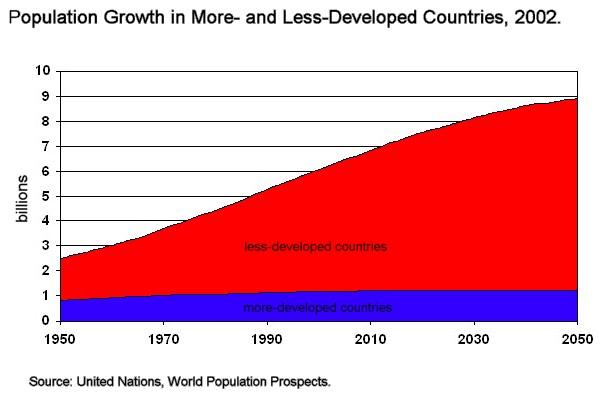
    World pop growth

    Can you see the trend? Poor nations are getting more populated, which drives down the value of their labour drives down the value of the crops they produce, and drives down the price of the the other commodities they can produce. In a system of global free-market capitalism: A hungry person will work harder for longer, than a well-fed one. A person who lives in a country with high infant mortality rates will have more children that a person with great well-equipped hospitals and doctors, in every city.

    It’s ludicrous to be criminalising things which would never exist if we paid more for our edible crops. For example, 1kg of opium resin is worth $2,506 if you buy it wholesale directly from the farmers in Afghanistan. That heroin has a market value of $6,600 in the USA.

    The drug problem is the inevitable conclusion of exploiting the developing world’s labour, crops and raw materials.

    I should really have written this as a series of blog posts, but I might is this in a non-fiction book I plan to write if I can convince somebody I like to co-author it with me. Or at least get a literary agent to find me a publisher and give me an editor.

    Side note: I started writing this on Saturday and it’s now Monday (well, Tuesday, technically) and I’ve hardly slept. I must publish this now, and proof-read and edit tomorrow.

    I hope you find these 4,000 words entertaining.


    Tags:  

  • Thing my brain told me to say

    This is a story about being an observer…

    Life through a lens

    Regrettable social media rant number 4294967295.

    Mushrooms.

    If you don’t like them, then don’t eat them. Agreed?

    We can sell them. We can have them in our supermarkets. We can have them in convenience stores. We can can find them on amazon dot com.

    We can tolerate the buying, selling, cooking and consumption of mushrooms. Agreed?

    We can see that mushrooms grow everywhere – they spring up in surprising places. Mushrooms are deliberately cultivated, because so many people enjoy eating them and choose to have them as part of their diet. We also regularly see mushrooms growing wild, i.e. not due to any deliberate human action or inaction.

    Nobody needs to sow any seeds. Nobody needs to do anything.

    Poppies and hemp are ubiquitous species that most laypeople would recognise as a cash crop farmed in a monoculture: Massive fields full of the same thing, planted and being nurtured by humans. Mushrooms are different because mushrooms grow wild all over the many islands of the United Kingdom.

    We can tolerate the existence of mushrooms. Agreed?

    We have not embarked upon any eradication programs to rid ourselves of a popular edible foodstuff that grows wild in our environment, without any human cultivation. We have not tried to wipe out a source of human nourishment which many people choose to have in their diet because they enjoy the flavour, texture and smell of mushrooms.

    Yet.

    Bizarre as this sounds…

    I picked an edible foodstuff from where I found it growing wild, and I ate it. During the briefest of moments, when the mushroom was picked and was being transferred to my mouth, I was breaching the law.

    During the few elapsed seconds it took me to pick a wild mushroom, put in my mouth and swallow it, I could have been arrested and prosecuted for a very serious crime that carries extremely harsh punishments.

    That’s weird, right?

    Weirder still is that once the mushroom was in my stomach I was no longer arrestable or prosecutable. If I had lowered my mouth over the mushroom, bitten it and swallowed it, arguably no crime was committed at all. If somebody else had picked the mushroom and dropped it into my open mouth, then I didn’t break the law.

    Even weirder is that the punishment I might have received for picking a wild mushroom and moving it to my own mouth to be swallowed, appears to imply that my actions were very gravely deleterious to society and the wider human race. The maximum punishment I could have received as a sentence for my crime would be 7 years in prison and be to fined an unlimited amount of money.

    There are only x trillions of pounds sterling equivalent of all global currencies in circulation worldwide, but the law would allow for me to be fined quadrillions, quintillions or indeed an infinite amount of money. Why not fine me a googol pounds? Why not fine me a Graham’s number of pounds?

    What for? What did I do that was so bad? What was wrong about my behaviour? Please explain it to me.

    Usually with crimes, there are victims. If you perpetrated a crime where there was a victim, harm was caused to property, or there was antisocial behaviour, then you need to be punished. That is obvious.

    For example, if I killed somebody, injured somebody or raped somebody – or otherwise caused harm to a victim and/or their property –  then I would need to be punished. We democratically decided what the punishments for crimes should be. We made our own laws via the democratic system. We have elected to have a justice system, policing and punitive institutions. Our laws are an approximation of what the majority of people would deem unacceptable behaviour in our society. We each individually differ with our opinions on what is right and what is wrong, but collectively, we have agreed upon one set of laws, which apply to almost all of us.

    Let’s just take a second.

    To digest.

    Let’s now try to swallow all of this.


    Pause.


    Possession of mushrooms is considered to be exactly the same as possession of crack cocaine, crystal meth, heroin and other “class A” controlled substances.

    Cannabis plants haven’t spontaneously started growing all over the United Kingdom. Somebody had to plant the seeds. Somebody has to cultivate the cannabis plants. Deliberately grown cannabis plants, which required so much human effort to bring to these islands where the plant varieties do not naturally occur, incur only the wrath of the law we reseve for “class B” controlled substances.

    Nobody is selling cannabis leaves in my local supermarket. Nobody is making TV cooking shows where cannabis leaves are considered to be an edible foodstuff included in a meal.

    Cannabis leaves don’t really need to exist – have no need to exist – because they’re not a common part of people’s diet.

    Even if you selectively bred and cross-bred cannabis varieties with the aim of creating a more palatable leaf, you would struggle to persuade many people to eat the leaves.

    If we study all recipes for appetising food that have occurred anywhere since the we first started making intelligible marks onto things – beginning with cave paintings and carved objects – we see no evidence of cannabis leaves as an ingredient that you’d want in your salad.

    This is an assumption, based on observable human behaviour over countless millennia, but the overwhelming evidence indicates that we collectively agree that cannabis leaves don’t belong in our mouths as part of our diet.

    I would ask for you agreement, but I think you should be allowed to eat a cannabis leaf to decide for yourself whether you like the taste. However, I can assure you that all the countless recipe books aren’t wrong: cannabis leaves taste bad.

    Once again: cannabis leaves taste terrible, hence why they have not become a popular meal ingredient.

    Cannabis leaves have no place alongside the other leafy vegetables we consider to be human nourishment.

    Agreed?

    Mushrooms aren’t to everyone’s tastes, but they are an ingredient in recipes which predate written language. Mushrooms were known to be food before humans even invented the word “food”. The human animal finds the taste of mushroom flesh to be appetising. The human animal always prefers to eat mushrooms not lemons. Although a diet of lemons might technically sustain you, I suspect you would be hard-pressed to find a single person in 7.6 billion who chooses a diet of lemon-like foodstuffs as a significant source of their daily calorific nourishment requirements.

    So if it’s a choice between mushrooms or starving to death, you’d eat the mushrooms. Agreed?

    If it’s a choice between eating lemons, eating mushrooms, or starving, you’d choose the mushrooms. Agreed?

    If ever there was a more ludicrous example of an approach to what is legally referred to as “The Misuse of Drugs” then it would be criminalising the possession of mushrooms.

    We had better build a whole lot of prisons to hold all the farmers, greengrocers, supermarket employees, cooks, chefs, restauranteurs, diners – practically every person in the entire United Kingdom – for having some mushrooms.

    Mushrooms are quite literally everywhere: Growing everywhere. We can’t control them.

    Having a law that talks about “controlled substances” and “Misuse of Drugs” whilst also classifying mushrooms as “class A” – the very most harmful substances to society – is beyond ridiculous.

    If ever there was a better example of nature refusing to be controlled by human laws, then it would be mushrooms.

    Mushrooms stubbornly refuse to be controlled, even though they are specifically referred to in law as “controlled”. They are literally called a “controlled substance” when our own eyes confirm that mushrooms do not care about human laws and refuse to be controlled by any statutory instrument. Mushrooms act in contempt of our courts. Mushrooms spitefully flout our laws.

    Mushrooms wilfully refuse to comply with the wishes of Her Majesty the Queen, resisting and obstructing the Crown’s agents. Mushrooms have no respect for the individuals who have been elected to represent their constituents as Members of Parliament, sitting in the House of Commons in the Palace of Westminster by virtue of the democratic system of governance, as self-determined by the citizens of the United Kingdom.

    Ha ha ha.

    Joke’s on you suckers.

    You literally voted for mushrooms, in so many ways. With your pounds. With your electoral ballot. With what you put in your shopping trolley. You voted with your mouth, in so many ways, but mainly by putting mushrooms into your mouth.

    You wanted mushrooms. Most people want mushrooms.

    Yet, you also allegedly wanted mushrooms to be so very criminal, that their possession, dealing, cultivation and trafficking would deprive UK citizens of their liberty FOR LIFE, detained at Her Majesty’s pleasure. However, I suspect that is not what what most people want.

    You want mushrooms in your shopping trolley, but the law considers them to be EXACTLY THE SAME as crack cocaine, heroin and crystal meth.

    Are you high?

    Will somebody please come and lock me up, because I bought mushrooms, cooked them and ate them.

    When should I expect the police?

    Or should I just hand myself in at the nearest police station?

    What should I do with any mushrooms I have left remaining uneaten? Should I put them in my compost bin, like the local council tells me to do, or should I hand them over to the police as evidence?

    What would be the learned opinion of any Queen’s Counsel who I retained the services of? What would the opinion of the Attorney-General be? What would the right honourable Geoffrey Cox think about my mushrooms? What about the countless mushrooms which continue to exist in flagrant disregard of the statutory instruments which control them, the judiciary, the courts, the police and the other Crown institutions which seek to enforce the laws of the United Kingdom?

    Is this what “take back control” looks like? Apparently that’s what 51.9% of the UK population democratically voted to do.

    Assuming that we regain full control, do you think mushrooms will begin to care about the laws controlling them?

    Fundamentally, isn’t there just one set of laws we can all universally agree upon?

    You can’t legislate in contradiction to the universal laws of physics.

    You can’t just write something down on a “special” piece of paper and expect the universe to comply.

    Again, for those who are slow learners: The only laws are the universal laws of physics, which are immutable.

    The laws of physics are universal and have existed – and will always exist – while there is a universe.

    You can dress up in fancy wigs and robes and prance around in grand buildings. You can put shiny things that you found in the ground onto your head if you like. But you know what? The universe thinks you’re an idiot if you do that. The universe thinks you’re absurdly insignificant and finds it perversely hilarious that its laws quite literally predicted your existence and your behaviour, but yet you do do not properly perceive what is so obviously observable all around you.

    If you think humans make and enforce laws, you are an imbecile, as illustrated by the humble mushroom.

    Humans and their behaviour were preordained from the moment of the universe’s conception, along with the immutable and universal laws of physics. The laws of physics predicted and explained literally everything.

    If you think that mushrooms can be controlled by statutory instruments created by Acts of Parliament, with Crown agents of Her Majesty The Queen enforcing those statutory instruments, then you my friend, have overlooked almost the entire observable universe.

    Through simple observation, we can plainly see the irrefutable evidence of the existence of a set of fundamental and universal laws, which are immutable.

    In short: Mushrooms exist. Deal with it.

    Deal with it by understanding and accepting what is observable.

    Do not “deal with it” with acts of human behaviour that the universe doesn’t care about. The universal immutable fundamental laws of physics predicted all your BS well before you even thought about it.

    Deal with it.

    Deal with it all.

    Accept it.

    You cannot change the laws of physics, no matter how badly you want to. Irrespective of your genius or how you manage to collectively conspire, no individual, group or entire species can ever change or avoid the fundamental universal immutable laws of physics which govern all things for all time.

    I know it’s a lot to take in, but I suggest you make a start by opening your eyes.

    Then, just observe.

    Mushrooms exist and we should stop having a tantrum about their existence, because that behaviour is ludicrous, absurd and also totally hilariously predictable. Yet, the majority of us are unforgivably ignorant and act petulantly and arrogantly, whenever we assume that WE make and enforce the laws, when in fact the [universal] LAWS [of physics] MADE EVERYTHING, including us and mushrooms: We’re made of the same stuff.


    Tags:

  • Playing the Long Game

    This is a story about sustained effort…

    Mound of wires

    I like to concentrate on one thing at a time. I like to be hyper-focussed and blinkered, and to devote all my energy and attention towards achieving a single goal. I like to live my life in an artificially simplified way, by aggressively cutting away anything which seems superfluous; a distraction from my main task.

    Unfortunately, I have several concurrent tasks:

    • My work
    • My debts
    • My writing
    • My love-life

    There are more – such as friends, family, health & fitness, hobbies etc – but I’m not listing those, because I’ve deemed them temporarily nonessential.

    In fact, I had deemed dating to be nonessential, but my life had become too lonely and austere to be bearable. I was torn between investing in my [nonexistent] social life and looking for love. I chose the latter, because of how long it had been since I’d hugged or kissed anybody. Intimacy is important.

    My work is arguably a task which will never be completed, but my debts have almost been dealt with. The sum total of my savings is £30,000 and the sum total of my debts is £29,000, so I’m finally ‘in the black’ although it will be some time before I’m able to release the money and free myself from the bonds of usury. Then, the question is how much money do I really need to live a happy life? I have to decide about this thing people call “work-life-balance” which I always thought was a myth. Without the millstone of debt around my neck, suddenly I gain enormous freedom of choice.

    My writing has been the casualty, of late.

    Hypomania was rearing its ugly head, threatening to destroy all my hard work building a good reputation in the office. I got a cold and my brain was horrendously sluggish. I suffered alcohol abuse, bad diet, lack of exercise and general neglect of everything in my life, because I was so single-minded in my mission to pay back my debts. My mind was telling me how brilliant I am, that I’ve managed to rescue myself from a dire situation, successfully deliver some software projects, impress my colleagues, work hard and generally function in society pretty well. I’ve been getting up early and going to the office. I haven’t been taking time off sick. I haven’t had much time off on holiday. I’ve just worked and it’s paying off, but I’m so exhausted that I’m going a little crazy. It’s hard to deal with the reversal of fortunes; my boom and bust real life triggers psychological problems.

    During 3 years of writing my blog almost daily, I never start writing a blog post on one day and then finish it on another. My mind races so much and my feelings change so violently that the tone and content of what I’m writing can veer from one extreme to another, faster than I can pour out words onto the page. One reason for writing so much so quickly, is to capture the variety of my moods and give myself a fighting chance of being able to spot more general trends. In fact, I rely heavily on my regular readers to spot those trends – they’re a far better judge of whether I’m swinging into a high or low episode, than I am myself.

    To have skipped days of writing really upsets me. I feel really bad when I neglect my writing and my readers.

    I have no idea where my writing will take me, especially when I suffer major setbacks such as a sudden loss of thousands of Twitter followers. These things shouldn’t matter, but they’re psychologically damaging. My digital identity does serve as a substitute for a lot of the things which are presently missing in my life, such as a group of local friends, social engagements and a healthy relationship with my family.

    That my life is so damaged should come as no surprise when you consider the magnitude of the tasks which I’ve been set. Divorce, drugs, alcohol, homelessness, debt and all the accompanying loss of status, stigma and family estrangement – the sense of failure, disappointment and “letting everyone down” – can each be fatal on their own. In combination, those things are a toxic whirlpool; a quicksand which nobody could ever hope to escape from. I could be very upset and depressed about all the things which are broken in my life, but instead I struggle not to get carried away with the minor miracle which has happened: I’ve bounced back and re-entered civilised society, seemingly without any permanent damage.

    So many parts of our society are set up with the optimistic presumption that people are capable of turning their lives around and being rehabilitated, but it very rarely happens. While those who work with addicts, criminals and the debt-laden are very keen to see lives transformed for the better, the reality is that most of the stories do not have happy endings. Most of the stories have sad predictable endings, which are quite tragic.

    I’m terrified that I’m going to hit a glass ceiling soon. I will have a mental illness until the day I die. I will always suffer from social jet-lag and a personality which is incompatible with the rat race. I can’t change the past – the stigma of addiction and the paper trail which got left in my wake, during an unfortunate period of my life, will follow me around forever. There is no limit on what the organisation I’m presently involved with is able to see: they have access to a vast database of unflattering things, which can never be deleted. My mistakes can never be expunged from the archives.

    I could delete this blog, but then where is my reply to the opinions of me expressed upon records kept by organisations who I unfortunately came into contact with?

    I would be so much more vulnerable to stigma, prejudice and discrimination, if I allowed other people to lazily sum me up in a few short sentences. Human lives are so much more messy and complex than any amount of words on a page could ever possibly express. It seems like the most natural reaction to being pigeon-holed, to do something like this: to create a document so large that it doesn’t even fit in a goddam pigeon hole.

    It might seem obvious that I’d be quickly identified as a nut; a crackpot; a madman. That seems like an easy label to attach to me.

    However, my long and successful career, the vast sums of tax I’ve paid, the wealth I’ve generated for the economy, the tangible products of my labour and intellect – all of these things contradict any attempt to lazily dismiss me as a ranting madman, of no use to anybody, who should be quietly nudged towards the fringes of society until I’m completely marginalised.

    My writing is the only thing in my life I have complete control over. I can write as much as I want. I can publish as much as I want. Every act of writing and publishing is an act of rebellion – a protest at the excessive burdens of life – as well as an addition to a growing cache of proof of my productivity and usefulness. I write because it will frustrate and contradict any attempts to write me off.

    On paper, I was a write-off.

    Nobody would touch me with a barge pole.

    If you were presented with a list of all the unflattering things about me – my mistakes; my debts; my problems – as a bullet-pointed list, then you’d have dumped me straight onto the “no hope” pile.

    Technically, I don’t exist, because my existence is too improbable; my problems were too insurmountable. I should not be alive. I should not be debt-free. I should not be clean. I should not be working. I should not be housed. I should not have money. I should not be out there in the big wide world, walking around like I’m a regular normal member of mainstream society.

    I could place put my faith in those who have sworn to make decisions without prejudice or discrimination. I could entrust my whole future – my happiness and my livelihood – to people who’ve never met me, who will judge me based on a few bullet points. That seems pretty risky to me though.

    This is what I anticipated would happen. I knew that sooner or later, if I kept telling my story, I’d reach a point where the rags-to-riches-to-rags-to-riches-to-rags cycle would either conclude – in my suicide – or else I would finally get a chance to have a liveable life. This document contains a vast number of mistakes and unflattering things about me, but it also charts the course of a stupendously unlikely journey, which was almost certainly doomed to failure. If somebody in a position of power is going to thwart me, I want them to do so with a guilty conscience, because they were too lazy to consider all the available information. I’m so much more than a few bullet points on a page. I cannot be dissected with a 66-page form.

    Of course, it’s terribly teenage angsty to think of myself as a misunderstood character. It’s horribly conceited and arrogant to think I’m special and different. I try not to concern myself with such judgements and instead to concentrate on my continued efforts to produce tangible things: to create.

    Lots of people have written lots of novels, journals, diaries, blogs, newspaper columns, magazine articles and all the very many other works of printed words. There are quite a lot of prolific writers, who have churned out vast quantities of prose. Does that mean I shouldn’t bother? Does that mean I shouldn’t even try?

    I haven’t been very productive during the past couple of weeks, but it doesn’t matter because what I’ve produced is cumulative. Every little effort is slowly adding up to create some big achievements. It’s painfully slow, but the progress appears to create sudden overnight success. Nobody really notices all the hard work and nobody can see where it’s headed, until one day a huge milestone is reached and everything all makes sense.

    The relief of having more-or-less reached one of my most important goals, is highly destabilising and is triggering hypomania: it’s hard not to get carried away with the perceived magnitude of my achievement. It’s hard not believe my own bullshit – that I’m invincible and that I can overcome any obstacle. It’s tempting to act recklessly, believing that I’ll always be able to rescue myself from disastrous situations. It’s hard to keep reminding myself that my luck will run out eventually, if I keep tempting fate.

    I’ve missed this blog and I’ve missed writing. I’ve been destabilised, but I’m going to force myself to continue with my routine, because I think it’s very healthy and stabilising for me.

    Sorry for the gap in my regular writing.


    Tags:

  • I Am Ridiculously Exposed

    This is a story about laying it all on the line…

    Glasses

    My livelihood, any realistic prospect of me being able to pay back my mountainous debts and the impossible dream of restoring myself to health and wealth – escaping the nightmare – hinges upon successfully blending in as a part of an organisation which is particularly noted for being intolerant of anybody with bad character.

    I’ve been required to fill in a 66 page form which legally obliges me to disclose criminal convictions, psychiatric problems, the abuse of drugs and alcohol, partners from the last 3 years, marriage, divorce, bankruptcies, loan defaults, debt repayment agreements, financial conduct and details about my parents. Most employers are only entitled to know about any unspent criminal convictions, under the Rehabilitation of Offenders Act 1974, but I work for an organisation that knows everything.

    Of course, I’m ahead of the game, because I’ve already publicly declared every single unflattering thing about myself.

    Luckily I’ve never been convicted of a crime, but there are still some things I’m legally bound to disclose which would portray me in a less-than-ideal light to the powers that be, who will judge me based on what they see on paper. My life and my future will be reduced to a few scribbles on a form.

    Many people have been through rough breakups and divorces and had breakdowns. Many people suffer from mental illness. Many people have had periods where they’ve drunk too much or dabbled with recreational drugs. Nobody is squeaky clean.

    I’m in the ludicrous situation where I’m more-or-less managing to plod along and keep my mouth shut, and demonstrate that I’m a competent and capable valuable team member at work, but I’ve continued to write and publish this blog using my real name. I’ve continued to write with unflinching honesty about some of the terrible stuff I’ve been through and the aftermath of problems I’m dealing with, as I desperately attempt to get back on my feet.

    I’m in the ludicrous situation where my hard work is beginning to pay off and my debts are getting rapidly repaid. I’m in the ludicrous situation where there’s an end in sight, provided nobody screws me over.

    It appears to be self-sabotaging that I would continue to write and publish stuff which makes me so exposed and vulnerable, but in fact my online presence has been one of the big factors in my recovery. Without being able to share my story and connect with kind supportive people, I couldn’t have gotten this far. Without having the sense of identity, pride in my achievement and the structure and routine that daily public writing gives me – the scrutiny – then I would have been destroyed by my problems and would have perished in obscurity long ago.

    Whaddya want to know about me?

    Trouble with the police? Sure. I got caught with legal highs a couple of times.

    Psychiatric problems? They don’t call me Nick “Manic” Grant for no reason. I make no secret of having bipolar disorder.

    Drug and alcohol abuse? Not the former anymore but the latter is a bit of a problem, although my drinking doesn’t seem to be any more abusive than that of most of my colleagues. Arguably I’m successfully self-medicating, because I’m functional and unmedicated.

    Partners from the last 3 years? I haven’t co-habited since separating from my wife.

    Marriage and divorce? Tied the knot in Hawaii. Divorced 18 months later.

    Bankruptcies and other debt problems? I pay my bills. I’ve never defaulted. I’m a good debtor.

    Financial conduct and credit score? I need to pay back half my credit card debt ASAP but that’s the only bad thing on my credit file.

    Parents? They’re not seditious traitors. They’re not Russian, Chinese or terrorist sympathisers. They’re not political agitators.

    What about my character in general? I’ve had a successful career spanning more than 2 decades, working for some very big organisations on important projects. If I was some kind of fraudster or con artist, my true character would surely have been unmasked by now.

    There’s a lot written down here which could easily be twisted and used against me by somebody intent on casting me in a bad light. I write a lot of things about myself which are very unflattering and wouldn’t usually be publicly declared by people. I spend a lot of time asking people to take the things I voluntarily tell them and to decide for themselves how they want to judge me.

    It’s a ridiculous thing to do.

    For one reason or another I’ve become easier and easier to find, for anybody who bothers to look. Because of a recent mistake I made I’ve become even easier to find than ever before. All the effort that I’ve put into projecting myself into public consciousness, because I’ve been on the verge of suicide for so long, is finally gaining traction and I’m becoming a victim of my decision to make myself exposed and vulnerable.

    Every time I write and publish I have to consider the consequences to my life. I have to make a decision between my ideological belief that we have a right to live with the freedom to be proud of our identities and to be open and honest, without fear. If we really live in a free country I should be free to be candid and not suffer persecution and tyranny. If we honestly believe in equal opportunities and our laws forbidding discrimination, then we need to take the brave and bold step of speaking without fear of repercussions.

    This vast repository of information that I’ve created is the polar opposite of a 66 page form, designed to distill me down to a few ticks in boxes. This 1.1 million word document is intended to frustrate the reader who is looking for a convenient pigeon hole to stuff me into.

    Do your worst. I’m not afraid.


    Tags:

  • Addiction World Tour

    This is a story about drug smuggling…

    Tablet

    I never intended on becoming a narcotics trafficker. It happened by accident. To say that I’m a helpless puppet with my strings being pulled by the unseen hand of addiction, is not the whole truth. My executive brain functions and rational mind are still present, but there’s quite a battle that rages within me. I’m mostly unaware of powerful subconscious thoughts which are often driving my behaviour, with my superego unable to perceive that I’m being steered towards addiction-sustaining acts, or indeed omissions.

    Travelling from a rich country to a poorer one, customs might not expect illegal narcotics to flow in that direction, and as such might be caught off-guard by anything smuggled across the border by a wealthy Brit. My rational conscious brain says it’s not worth taking the chance. Each country has their own drug laws and their own attitude towards those who flout them, with some countries being very punitive indeed, in an attempt to make an example of those who are part of the narcotics trade.

    I’ve carried controlled substances across international borders a few times, quite by accident. Obviously I’m not talking about kilos of cocaine. I’m talking about the occasional tablet which escaped my notice when I was packing my bags.

    I tried to buy some zopiclone – sleeping tablets – on the day I arrived here in Turkey. I hadn’t planned to, but I saw a sign for a pharmacy and I thought I would enquire if it could be bought over the counter. It turns out you can’t buy it without a prescription from a Turkish doctor.

    Then, predictably, I had a sleepless night.

    The last few weeks at work have been quite bearable, but perhaps only because I’ve been drinking heavily, taking sleeping tablets and also taking tranquillisers. I knew I was creating a problem for myself with the impending holiday, but I also needed to get through the seemingly unending and almost intolerable working weeks, without having a nervous breakdown.

    After hardly sleeping all night, I then had very vivid nightmares. A lot of my nightmares revolved around drug addiction.

    Feelings of overwhelming depression and anxiety have kept me in bed all day.

    I expected this.

    I’m paying the price for having made my working day more bearable using addictive sleeping pills and tranquillisers, because now I’m going cold turkey in Turkey. Lolz.

    I knew this would happen. I was prepared to accept some panic attacks and sleepless nights; some horrible anxiety and gnawing dread; feeling like the world’s about to end. This the deal with the devil that I struck: to be able to keep working my full-time job and able to cope, but to pay the price later.

    I could have sworn I searched my bag thoroughly, to ensure I wasn’t carrying anything through the airports that I shouldn’t have been. In fact I did search my bag thoroughly, but my subconscious prompted me to be not quite thorough enough. I genuinely believed that I was travelling with not even a single solitary tablet to salve my anxiety and insomnia, my my subconscious was much more alert – as anxiety reached its peak, it told me to search more thoroughly and it knew I would find something. One lonely blue tablet, nestled in the stitching of the fabric, which could only be located with an obsessive search.

    Of course, one blue tablet does not an addiction make.

    Lots and lots of ‘accidents’ do however add up to an addiction.

    It’s unavoidable that I’m going to have to suffer some cold turkey withdrawal from sleeping pills and tranquillisers this week. It’s unavoidable that I’ll return to the UK far less addicted – dependent – on medications than when I left. That’s one of the reasons why I chose to spend my holiday in a foreign country, where I’d be less likely to be tempted to fall back into old habits, although of course addictions follow you everywhere.

    I would argue forcefully that the worst of my addiction is dealt with, and I’m using medications to help me keep working and earning money, in order to pay off mountainous crippling debts. I would argue that I’m using medications reasonably responsibly, and not in an abusive or recreational manner. I would argue that I’m hyper-aware of the risks of becoming physically dependent on benzodiazepines, and would not risk that happening again now I’ve managed to escape the clutches of that dreadful class of drugs.

    It does however somewhat surprise me that I’ve managed to do it again – to smuggle drugs by accident – although mercifully this one tablet has therapeutic, not abusive potential. It’s a bona fide medicine. It’s not the dreaded slippery slope; the thin end of the wedge.

    I need to be aware of the risk that I could back-slide gradually into an increasingly abusive and regular pattern of drug abuse. I need to be careful. I’m well aware that the worst of my addiction was prolonged for a very long time, because I thought I was able to get away with casual, occasional or so-called recreational use, which lulled me into a false sense of security; I was deluding myself.

    Not the happiest story ever told, having spent the day in bed with the curtains drawn, but I often have days like this on holiday, where the accumulated stress and anxiety of the preceding months suddenly swamps me. I’ve hardly taken a day off sick, so it should be expected that I’d get sick as soon as I relaxed.

    It’ll soon be Monday morning, but at least I don’t have to go to work this week.


    Tags: